
#15 Split or steal?
Golden balls, neet’s and hindsight bias

This Week’s Brew
This week’s model is a good one and an eye opener.
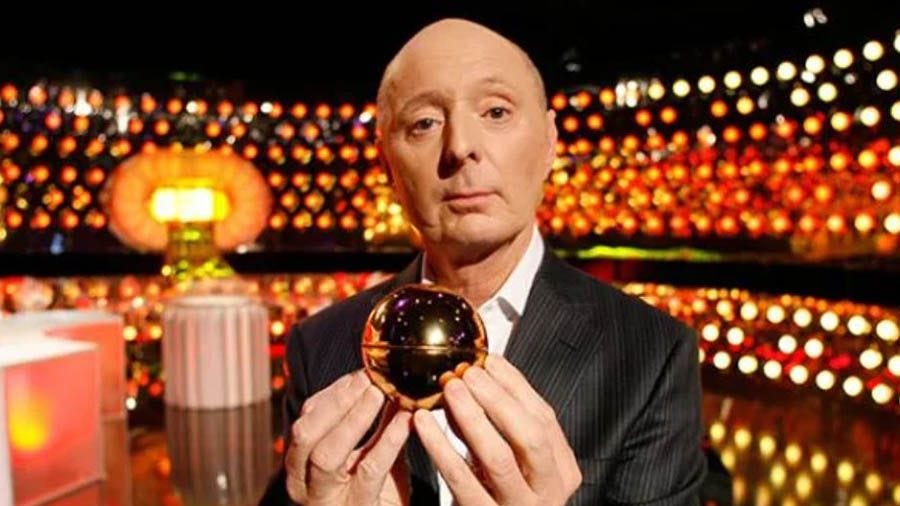
Do you remember the teatime show Golden Balls?
It was a classic gameshow, where contestant battled it out and built a prize pot.
The final round saw the remaining two players answer quick fire questions, adding to the pot before facing a decision that could leave them taking all, half or none of the winnings.
Time to use your imagination.
You’ve been invited down to play this game by the TV studio.
You meet the fellow contestants in the tea room before hand and there’s one lady who leaves a lasting impression on you.
Her name is Josie, she is a teaching assistant. She is here to try win some money to help send her daughter to university.
The game starts and everyone is doing well. The prize pool building nicely.
It gets to the final round, and it turns out you’ve got made it there, along with Josie.
The quickfire question round starts and you are on top form, answering 8 of the 10 questions. The prize pot has grown to £18k. Josie didn’t get a chance to answer even one.
Now it’s time for the big decision. You both have two balls in front of you.
One says split, the other steal.
If you both choose split, you split the prize and both walk away with £9k. Not bad for an hour’s work.
However, if one of you chooses steal, they will walk away with the full £18k
And if you both decide to steal, you both leave with nothing.
Before you pick your ball, you get 30 seconds to speak with the other contestant.
Take a moment before reading on.
What would you say? And what are your tactics?
I remember my session and my exact answer. Pure game theory.
The Prisoner’s Dilemma
This is a scenario where a pair suspects have been arrested and are being questioned by police over a crime. You have 2 options:
Cooperate with the other suspect and stay silent
Defect against the other suspect and betray them
This leaves 3 possible outcomes:
Both suspects cooperate and stay silent > each gets 1 year in prison
One defects whilst the other cooperates > defector goes free and the co-operator gets 5 years in prison
Both defect > both suspects get 3 years in prison
The most optimal outcome here, known as the Nash Equilibrium, is for both suspects to defect, as the maximum prison sentence they could receive would be 3 years.
Cooperation would be better for both, but self-interest from the other suspect means there is a chance they are betrayed and end up with the longer prison sentence of 5 years.
I would tell the other person I was going to steal, and they should split. I would then split the prize pot with them after the show.
This was me using the prisoner’s dilemma approach. I was then taking it a step further by asking the other contestant to trust that I would split the cash with them.
It was the only way I could guarantee walking away with half the money because if they also chose to steal, we’d both lose.
My therapist was intrigued at my answer. He said I was the first person who had answered that question with that approach.
It demonstrated my preference to punch myself in the face, rather than let someone else have that pleasure.
This was rooted in my own self-trust, or lack of.
Not being able to trust myself and take a risk. Not trusting my judgement of someone else’s character. Not trusting that if something did go wrong, I would still be ok.
I was closed off. In my own castle. You know what they say about castles, they may offer protection, but they can also become a prison.
He then showed me the below clip, and the contestant Nick was someone who he used to work with.
This is a truly amazing example of ultimate self-trust. It’s worth watching twice.
The thing is, there are other people who would never even think about stealing, nor contemplate someone stealing from them. Maybe that was you when you were playing out the scenario above.
Unfortunately there’s no cash prize at the end of this post, but hopefully you’ve got something worth even more.
An idea of what is true self-trust.
Espresso Insights
Number- 907,000… the number of young people aged 16-24 in the UK currently not in education, employment or training (NEET) during the period Oct-Dec 24
This represents 13.4% of all individuals in that age range
There’s been an increase of 110,000 vs the same period in 2023
It’s the highest number of NEETs in over a decade, a worrying trend
Reading this makes me sad.
My younger brother falls into the lower range of this cohort aged 17. He didn’t get into the college he applied which left him stuck. He’s tried to find work pretty much anywhere and as a lot of adults experience, you apply for jobs online and never hear back. The application falls into the abyss, the job search a black hole.
He and a friend found some work last week, helping to paint a fence for a day. He was paid £40 cash. When I spoke to him that evening, it was heart-warming how proud he was that he earned his first bit of money.
I remember that feeling too. That feeling of self-worth, that you had put effort in and been rewarded.
The fact so many young adults are being denied this feeling is disheartening. It’s made me think, maybe there’s a project here that needs to be started.
How can we make work and education accessible to these young people?
Looking back at my journey to becoming a chartered accountant, I took an unconventional route. I didn’t go to college, deciding to work full time as a labourer. From there I become a qualified Personal Trainer and only after that did I land in finance. I wouldn’t change that, it’s given me a unique skill set vs my peers who went to Uni, done a placement and worked at a big 4. They’ve got book smarts but won’t have my perspective when it comes to people.
That’s where I feel these young adults are missing out. The soft skills, the social connections, the ability to deal with different types of characters. You need these in every industry. You need these in life.
Quote- “Action solves everything, without action nothing will happen” Rockefeller
Remembering this helps me when I get stuck in my own head. I am prone to wasting time overanalysing. Just getting started and acting removes this barrier. Feedback over theory.
Lesson- Be aware of the language you use towards and about yourself.
A line I have probably butchered from the Netflix documentary on Kanye West. Think what you like about the one they now call Yeezey, the man has been extremely successful in multiple fields. Once you see this, you’ll notice it everywhere.
Sip Of Wisdom
*Hindsight bias*
Is this the number one thing every human is guilty of?
I think so.
It’s likely you’ve made a decision in the past that’s not played out as expected. It’s equally likely you’ve thought about what would have happened if you had made a different decision, based on that outcome.
Unfortunately, that’s not how decision-making works.
We make our best judgements based on probabilities and expectations, but the outcomes will have way more variables than we can predict or comprehend.
In hindsight, we would all have bought bitcoin back in 2010, would have got a lottery ticket with all of Saturday nights numbers and stocked up on toilet roll before covid hit.
When you’ve seen the answer to the question, it seems obvious.
Don’t let hindsight bias damage your thinking, use it to your advantage.
Learn from the outcome and if there were any factors you overlooked, then take those into account for the next time you need to make a decision.
Progression, not perfection.
Your Round
If you could start a business, what would it be? And why?
Until next time,
Chris
Refill Your Cup
My good friend Alex is running a 100-mile trial race in a few weeks’ time, raising money for a local charity, the Lucy Rainer Foundation. Yes, that’s just under 4 marathons, and he’s aiming to complete it in under 24 hours!
The charity helps provide mental health support for young adults throughout Surrey. If you’d like to make a donation, please use this link-www.justgiving.com/page/awdpecorators